
Lasting Relief from Deep Fascial Restrictions
Myofascial Release in Waterville for chronic tightness and limited mobility unresolved by stretching alone
Sustained pressure applied to fascial restrictions allows the connective tissue that surrounds muscles, organs, and bones to release gradually, restoring mobility that has been limited by adhesions or thickened fascia. Bekkah @ People's & Blue Rose Wellness provides myofascial release in Waterville using techniques trained specifically for fascial system work, which differs from muscle-focused massage because fascia requires prolonged, patient pressure to soften and unwind rather than the rhythmic strokes used for muscular tension. Maine's cold climate and physical demands—shoveling snow, splitting wood, prolonged sitting during winter months—create the exact conditions that cause fascial tissue to tighten, thicken, and develop restrictions that limit how joints move and how muscles function.
Fascia is a continuous web of connective tissue that responds to sustained pressure by gradually softening and elongating, but the process requires time and patience during each application. The practitioner identifies areas of restriction through palpation, then applies steady pressure or traction to the tissue and holds it for several minutes, waiting for the fascia to release before moving to the next restriction. This is not a relaxing, flowing massage—it involves periods of stillness while the tissue responds.
Request an assessment to identify specific fascial restrictions limiting your movement.
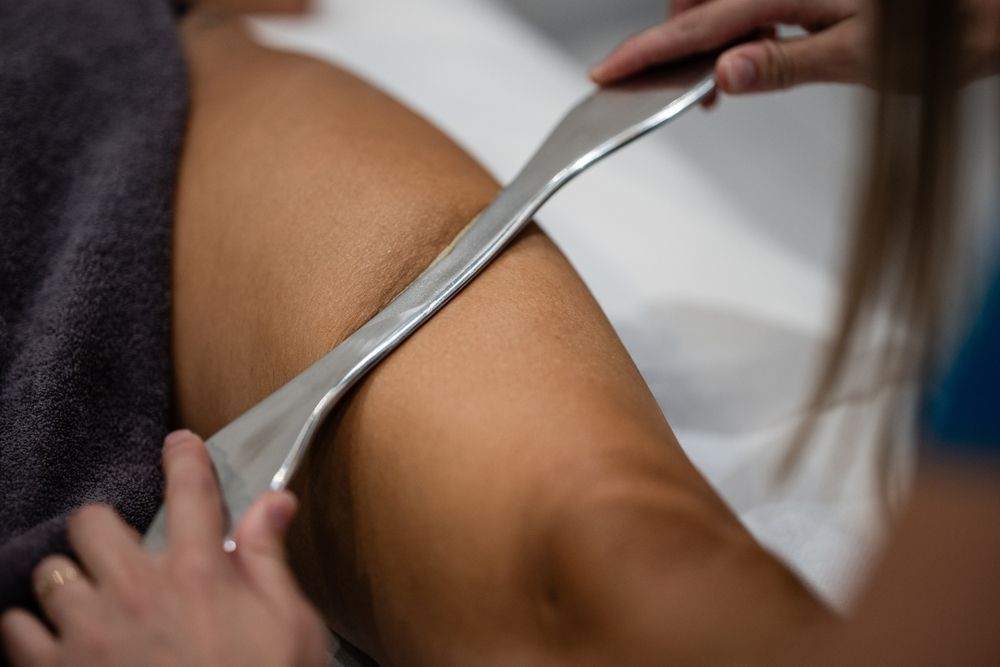
Why Fascial Restrictions Require Sustained Pressure
Fascia releases through a process called creep, where connective tissue gradually lengthens under sustained load rather than responding to brief or rhythmic pressure. The practitioner applies pressure to a restriction and holds it for typically three to five minutes or longer, monitoring tissue response through their hands and adjusting pressure as the fascia begins to soften. Some techniques involve compression directly into the restriction, while others use traction to stretch fascia in a specific direction, and still others involve unwinding—following the tissue's natural movement pattern as it releases.
After myofascial release work, you typically notice that movements which felt restricted or bound now feel smoother and require less effort, joints move through a fuller range without the sensation of hitting a barrier, and areas that felt tight or dense now feel softer and more pliable. Bekkah @ People's & Blue Rose Wellness combines myofascial release with an understanding of how fascial restrictions affect cellular function and inflammation, addressing not just the mechanical restriction but the broader tissue health concerns created by chronic fascial tightness.
The work can be intense during application because pressure is held directly on restricted tissue, and you may feel sensations of stretching, burning, or aching as the fascia releases. Results often continue developing for one to two days after a session as tissue continues to reorganize. Myofascial release works best when combined with movement and stretching between sessions to reinforce new tissue patterns and prevent restrictions from reforming.
What Property Owners Usually Ask
Myofascial release techniques prompt questions about how the approach differs from other bodywork and what the process involves.
What does myofascial release feel like during a session?
You'll feel sustained pressure held on specific areas of tightness or restriction, sometimes for several minutes without movement, which can create sensations of stretching, warmth, or temporary discomfort as the tissue releases—quite different from the flowing strokes of traditional massage.
How does myofascial release differ from deep tissue massage?
Deep tissue massage uses rhythmic strokes with firm pressure to address muscle tension, while myofascial release applies sustained, stationary pressure or traction specifically to fascial tissue, waiting patiently for the connective tissue to soften and release rather than working through muscle layers.
When is myofascial release most appropriate?
The technique addresses chronic tightness that doesn't fully resolve with stretching or regular massage, restricted joint mobility where you feel like you're hitting a barrier when moving, or persistent tension patterns that return quickly after other treatments—all common results of Maine's cold weather and physical lifestyle demands.
What training does myofascial release require?
Proper myofascial release requires specific training in fascial anatomy, restriction assessment skills, and understanding of how fascia responds to sustained pressure—including knowing how long to hold each application and how to follow tissue unwinding patterns.
How long do myofascial release results last?
Because the technique addresses connective tissue structure rather than just muscle tension, results often last longer than traditional massage, particularly when combined with movement practice between sessions, though duration varies based on activity level and how quickly your body recreates restrictions.
Bekkah @ People's & Blue Rose Wellness applies myofascial release techniques based on training in fascial restriction assessment and proper release methods. Reach Bekkah at (207) 314-4739 to discuss how fascial work might address your specific mobility limitations.